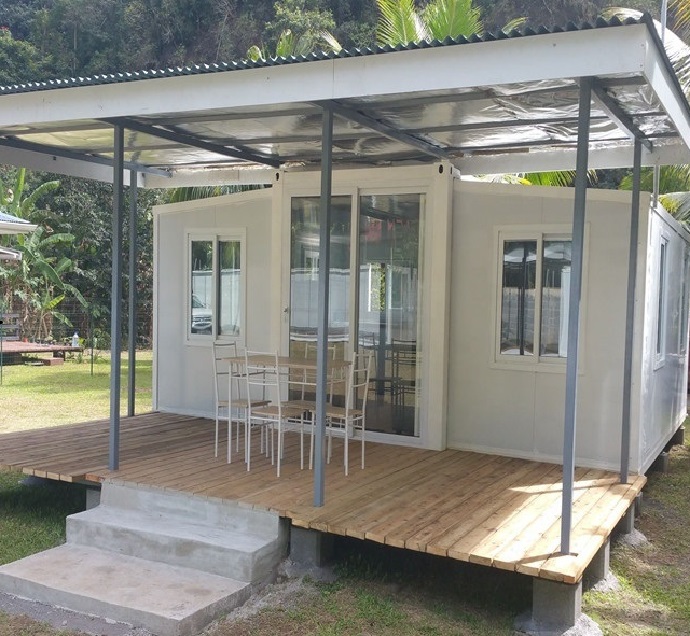
Folding Container House and flat pack container house buyers usually want to know more than which product opens faster. They need to estimate delivery, labor, tools, site preparation, weather performance, and the effort required to make the unit ready for use. WZH Group can help buyers compare these practical details against their project requirements.

The short answer is that a folding unit is often quicker to erect when the site is ready and lifting equipment and a trained crew are available. A flat pack unit arrives as separate components and generally needs more assembly, but it can be easier to ship in quantity, configure in different layouts, and replace or expand by module. The actual result depends on the design, transport method, crew experience, and supplier instructions.
A folding container house is transported with major sections connected by hinges or folding joints. At the destination, the crew positions the unit, unfolds its walls or roof sections, secures the connections, and checks doors, windows, and services. This can shorten the work compared with assembling a structure from multiple panels, provided that the delivery arrives in good condition and the site is level.
A flat pack container house is delivered as a package of structural parts, panels, and fittings. The crew assembles the frame, installs wall and roof panels, secures the joints, and completes the doors, windows, and interior components. This takes more steps, but the modular approach can suit projects that need several connected units or a layout tailored to a site.
As a practical planning estimate, a simple folding unit may be erected in a few hours by an experienced crew under favorable conditions. A flat pack unit may take a full working day or longer, depending on size, design, crew numbers, and finish level. These are planning ranges, not guaranteed installation times. Ask the supplier for a written installation plan based on the exact model.
The table below gives general comparison points rather than specifications for every product. Dimensions, weights, materials, wind ratings, and installation requirements vary by manufacturer and model. Request the technical drawing and verified product data for the units being quoted.
| Parameter | Folding container house | Flat pack container house | What buyers should verify |
|---|---|---|---|
| Delivery format | Major sections arrive folded together | Frame, panels, and fittings arrive as components | Pack dimensions, loading plan, shipping quantity, and unloading method |
| On-site work | Unfolding and securing connected sections | Frame assembly followed by panel installation | Step-by-step manual, crew size, tool list, and lifting requirements |
| Installation time | Often shorter on a prepared site | Often longer because parts need assembly | Supplier estimate for the exact model and site conditions |
| Layout flexibility | Usually follows the supplied folding design | Often allows more modular arrangement and expansion | Permitted combinations, connection details, and available sizes |
| Ground preparation | Requires level, stable support at specified points | Requires a level base suited to the frame and load | Foundation plan, bearing loads, drainage, and local ground conditions |
| Transport efficiency | Can be compact compared with its deployed footprint | Can be packed efficiently, especially for multiple units | Freight volume, total weight, route limits, and unloading costs |
| Weather performance | Depends on frame, joints, seals, anchoring, and rating | Depends on frame, panel joints, seals, anchoring, and rating | Documented wind, snow, rain, corrosion, and insulation specifications |
| Power and battery | Battery system is generally a separate specification | Battery system is generally a separate specification | Electrical load, battery capacity, inverter, charging method, and runtime |
For a fair cost comparison, include more than the unit price. Add freight, unloading, foundation work, installation labor, tools or lifting equipment, service connections, and any weatherproofing or interior work required for occupancy.
Neither construction type is automatically more stable just because it is folding or flat pack. Stability depends on the engineered frame, the connection details, the foundation, correct anchoring, and whether the unit is installed according to the manufacturer's instructions. An uneven base can cause doors to bind, joints to gap, and loads to distribute unevenly.
Users often judge a unit by drafts, condensation, noise, and indoor temperature. These outcomes are primarily affected by insulation thickness and material, thermal bridging, window and door quality, ventilation, and the sealing of panel joints. Request the full wall, roof, and floor build-up rather than relying on a general claim that a unit is insulated.
After assembly, inspect corners, roof edges, window frames, floor joints, and service penetrations. Correctly fitted seals and regular maintenance matter for both types. In hot or humid climates, ventilation and condensation management should be planned along with insulation.
A container house does not have a fixed battery life simply because it is folding or flat pack. Runtime depends on battery capacity, usable depth of discharge, inverter efficiency, charging conditions, and the appliances used. For example, lighting and phone charging require far less energy than air conditioning, electric cooking, or water heating.
For an off-grid project, request a runtime estimate using your actual load schedule. A headline battery capacity without an appliance list is not enough to predict daily performance.
In both cases, a low purchase price can be offset by difficult access, expensive unloading, incomplete documentation, or extra site work. Compare like-for-like specifications and delivered project costs rather than comparing product names alone.
A folding model may suit emergency accommodation, temporary site offices, remote work camps, event facilities, and projects where a trained crew needs to make a unit ready quickly. It is a stronger candidate when the unit's standard layout meets the brief and the site has a prepared base and clear access.
A flat pack model may suit buyers planning multiple rooms, connected modules, phased growth, or transport of several units to one destination. It can also be appropriate where a local team is available for assembly and the project can accommodate a longer installation schedule.
Brochures may show a typical product, while the quotation may specify different materials or options. Request model-specific drawings, written performance data, and installation requirements. If installation speed is the deciding factor, ask the supplier to state the crew size, equipment, site conditions, and scope behind its time estimate.
A Folding Container House is often easier to install when the goal is to deploy a standard unit quickly on a prepared site. A flat pack container house is often the better fit when modular configuration, shipment of multiple units, or future expansion carries more weight than the shortest initial setup. Neither option is universally easier: labor skill, delivery access, ground preparation, and model-specific engineering can change the result.
Before choosing, compare the full installation scope, verified product parameters, weather requirements, and operating needs such as battery runtime. WZH Group encourages buyers to match the design to the site and intended use, then confirm details in the technical documents and quotation. With the right preparation, a Folding Container House can be a practical solution when fast deployment is the priority.
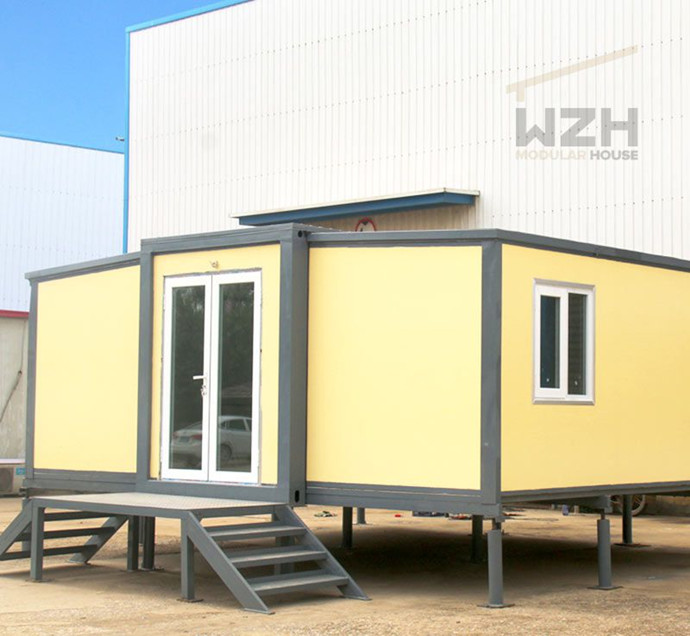 Daily Precautions for Installation and Use of Container House
There are many things that need to be paid attention to in the daily installation and use of container houses. Use container houses safely to reduce hidden dangers. Today, the supplier of Expandable Container House will introduce the daily precautions for
Feb. 21
 Where Are Container Home Builders?Container Shelter
To help combat COVID 19, a new initiative is turning shipping containers into intensive care units. Called CURA (connecting unit for respiratory diseases), the first building is currently under construction in the Italian city of Milan.
Jun. 27

WEIZHENGHENG Modular House Technology CO.,LTD provides various configurations of Flat Pack container houses. It can meet the needs of home living.
Copyright © Hebei Weizhengheng Modular House Technology Co., Ltd. All Rights Reserved |Sitemap