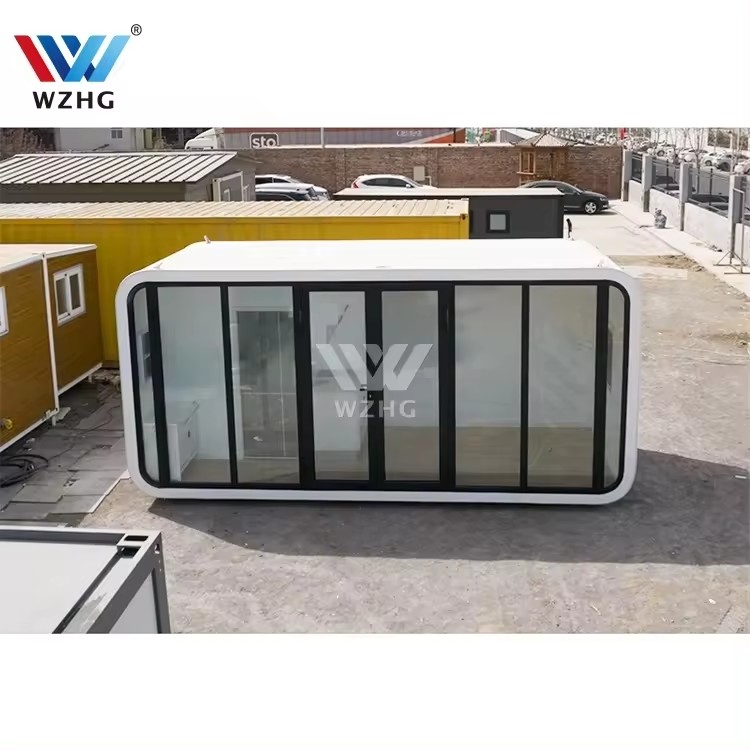
There is no single verified public price for a 20ft apple cabin. The final amount depends on the cabin specification, destination, shipping, site preparation, installation, and local requirements. If you are comparing the 20ft Apple Cabin price, the 20ft Apple Cabin cost with installation, or the 20ft Apple Cabin shipping cost, ask for an itemized quote and calculate the total landed cost—not just the factory price. The product may be marketed as a prefab cabin, modular home, or container house, but confirm its actual dimensions and construction. For an overseas order, clarify whether the quotation uses FOB or CIF terms.

A cabin’s advertised or factory price may cover only the unit as specified by the seller. It may not include freight, unloading, foundation work, utility connections, permits, taxes, or on-site assembly. A low base quote can therefore be difficult to compare with a higher quote that includes more of the project.
The name “20ft” is not enough to establish the exact footprint, internal area, or transport dimensions. Ask the supplier for a dimensioned drawing and packing details. Do not assume the cabin is a standard shipping container or that it can be moved using the same equipment; verify the product’s transport configuration with the manufacturer and carrier.
FOB and CIF are trade terms that describe parts of an international shipment; neither should be treated as a complete installed-project price. Under CIF, for example, destination charges, import duties, unloading, and site installation may still be outside the quoted amount. Ask the seller and freight provider to list exactly which charges are included and which party pays each one.
Use the following process to turn a product inquiry into a comparable, site-specific estimate. Keep the documents together so you can check that the specification, shipping plan, and final quote all describe the same cabin.
Tools: a measurement tape or site plan, a written requirements list, and photographs of the intended location.
Action: Record the delivery address, intended use, desired number of rooms, occupancy needs, and whether the cabin must arrive ready for use or be assembled on site. Note access constraints such as narrow roads, overhead obstructions, or limited space for a delivery vehicle.
Parameters: Give the supplier the exact destination, requested configuration, and any known site restrictions. Ask for the cabin’s external and internal dimensions, weight, and transport dimensions rather than relying on the “20ft” label.
Check: Confirm that the supplier has acknowledged the intended use, location, and requested options in writing.
If it fails: If you do not yet know the site dimensions or access limits, arrange a site measurement before accepting a delivery plan. An unknown access condition can change the unloading method and cost.
Tools: an email or supplier inquiry form and a comparison sheet.
Action: Request a written quotation from WZH Group or the supplier you are considering. Ask for the model name, included components, excluded components, customization charges, payment schedule, warranty terms, production estimate, and quote validity period.
Parameters: Ask the supplier to identify the exact materials and finishes, insulation details, doors and windows, electrical and plumbing scope, and whether appliances or furniture are included. Request a drawing and a line-by-line price rather than a single unexplained total.
Check: Make sure the drawing, written specification, and quotation refer to the same model and options. Confirm the currency and whether the price is for one unit.
If it fails: If a quote says “standard” without defining it, ask for the standard specification in writing before comparing prices or paying a deposit.
Tools: the supplier’s packing dimensions and weight, a freight quote, and a customs or import-cost checklist for the destination.
Action: Ask who arranges export transport, insurance, customs clearance, and delivery to the final address. Request the named delivery point and the applicable trade term in writing. Get a separate freight-provider estimate if the supplier’s shipping offer is not fully itemized.
Parameters: Verify the shipment’s dimensions and weight, loading and unloading responsibilities, destination charges, and whether the estimate includes delivery beyond the port or terminal. Check with the relevant customs authority or a qualified customs broker about duties and taxes for your location.
Check: Add the cabin quote and all documented transport, import, and destination charges. Label any unknown amount as an estimate rather than treating it as included.
If it fails: If a freight quote omits the delivery address or final unloading, request a revised quote. Port-to-port transport is not the same as delivery to a prepared site.
Tools: a site plan, local building and planning guidance, and written estimates from qualified local contractors where needed.
Action: Check whether the proposed location requires planning approval, a building permit, a particular foundation, drainage work, or utility connections. Ask the cabin supplier what support or installation instructions it provides, then confirm that the proposed foundation and lifting plan suit the actual product.
Parameters: Get the cabin’s loaded weight, support points, installation requirements, and utility connection details from the supplier. Requirements vary by product and jurisdiction, so do not assume a generic foundation or electrical arrangement is suitable.
Check: Have the relevant local authority or a qualified professional confirm the approvals and site requirements that apply to your project.
If it fails: If the supplier cannot provide the drawings or installation requirements needed for review, pause the order and request them before arranging foundations or equipment.
Tools: the final quotation, specification, drawings, payment terms, and delivery schedule.
Action: Check that the contract identifies the exact cabin, options, delivery responsibilities, payment milestones, remedies for changes or delays, and the documents supplied with the unit.
Parameters: Compare every contract line with the approved specification and quote. Confirm what counts as completion, who inspects the unit, and how visible damage or missing items must be recorded at delivery.
Check: Keep signed copies and written supplier replies. Do not rely on a verbal promise that changes the specification or price.
If it fails: If the contract and quote conflict, ask for corrected documents before paying. For a significant purchase, consider having a suitable local professional review the agreement.
A trustworthy price example needs a dated supplier quote, a defined specification, a destination, and a clear list of included and excluded charges. No independently verifiable named customer case or complete dated price quote was available for this article, so it would be misleading to invent a buyer story, testimonial, or price. Use the checklist above to build a real project estimate from documents tied to your location and chosen configuration.
When you receive quotes, compare them on the same basis: identical cabin specifications, the same delivery point, the same trade terms, and the same installation scope. A quote that excludes foundations and utility work should not be presented as directly equivalent to an installed-project quote.
Use the image as a visual reference only. Confirm dimensions, finishes, included equipment, and the quoted model with the supplier; appearance alone does not establish the specification or price.
Not necessarily. Ask for the delivery point and an itemized list of included freight, port or terminal charges, customs handling, final-mile delivery, and unloading. The answer should be written into the quote.
Do not assume so. Ask whether the price covers assembly, lifting, foundations, utility connections, and any local contractor work. The supplier should distinguish its own scope from work you must arrange locally.
Match the model, materials, dimensions, options, destination, delivery term, and installation scope. Then list excluded costs separately. If the specifications differ, ask for revised quotes on the same basis.
The accurate answer to “How much does a 20ft Apple Cabin cost?” is that the amount must be quoted for the selected specification and destination; a verified universal list price is not available here. Request an itemized cabin price, confirm shipping and site requirements, and calculate the full project total before ordering. A careful comparison of the 20ft Apple Cabin price, 20ft Apple Cabin shipping cost, and installation scope helps you budget for a prefab cabin, modular home, or container house without treating FOB or CIF as a turnkey total. Ask WZH Group or your chosen supplier for current written documents and verify local requirements before making a commitment.
 What Are The Classifications Of Container Houses?
The Container House Design Supplier point out that container houses can be divided into three categories according to their structural composition:
May. 29

WEIZHENGHENG Modular House Technology CO.,LTD provides various configurations of Flat Pack container houses. It can meet the needs of home living.
Copyright © Hebei Weizhengheng Modular House Technology Co., Ltd. All Rights Reserved |Sitemap